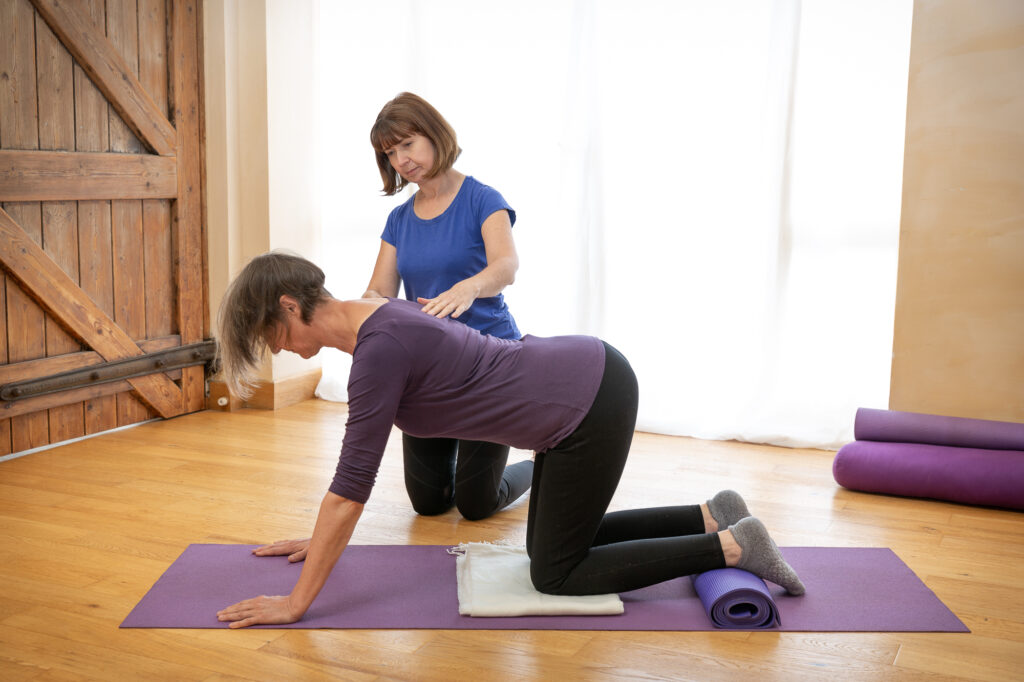
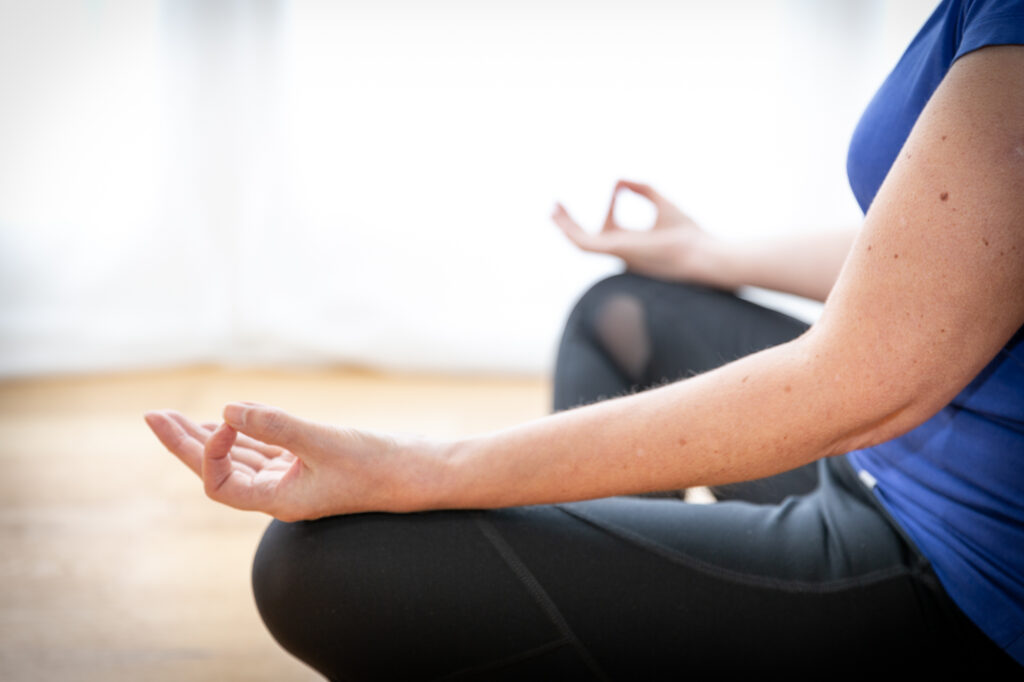
Back pain is one of the most common reasons people seek help—and one of the areas where our understanding has changed dramatically. For yoga teachers and therapists, this raises an important question: what are we actually trying to understand when someone says, “My back hurts”?
Pain is real. But pain is not simply a matter of tissue damage.
We can have pain without obvious injury, and we can have changes in our tissues without experiencing pain. This is particularly relevant to back pain, where findings such as disc bulges, disc degeneration and arthritic changes are common—even in people who have no pain at all. The relationship between what we see in the tissues and what a person experiences is therefore much more complex than we might initially think.
Pain is also influenced by the nervous system, previous experiences, expectations, emotions, attention, stress, movement and our sense of safety. When pain persists, the nervous system can become more sensitive, and movements or situations that were previously harmless can begin to feel threatening. Fear of movement can then lead to avoidance, reduced confidence and reduced activity, potentially reinforcing the cycle.
This does not mean that pain is “all in the mind”. This is never a helpful approach. Pain is a genuine experience involving the whole person. Understanding this can help us move beyond the idea that we simply need to find the “damaged” structure and fix it.
For yoga teachers and therapists, this opens interesting and exciting possibilities.
How can we use movement, breath, attention, awareness and relaxation to help someone feel safer in their body?
How can we encourage movement without reinforcing fear?
How should we respond when a student says, “I can’t do that because it will damage my back”?
And when should back pain be referred for further medical assessment?
Exploring these questions through contemporary understandings of pain and back pain is part of our workshop on Sunday 18th October. We will look at the difference between nociception and pain, why pain can persist after tissues have healed, how the brain and nervous system contribute to the experience of pain, and how our beliefs and expectations can influence recovery.
Most importantly, we will consider how this understanding can inform practical, compassionate and empowering approaches to working with people with back pain.
If you teach or work therapeutically with people, understanding pain can change what you teach and how you see the person in front of you.
Following our recent Red Flags Guide, we wanted to explore another important aspect of supporting people with their health: what happens when someone already lives with a chronic or complex health condition.
For someone with a long-term condition, it can be surprisingly difficult to recognise when something has genuinely changed. Fatigue may already be part of everyday life. Pain may come and go. Brain fog, poor sleep, digestive problems, dizziness or changes in mood may all be familiar experiences.
So, when a new symptom appears, it can be very easy to think, “That’s probably just part of my existing condition.” Sometimes it is. But sometimes it isn’t.
Conditions such as ME/CFS, Long COVID, fibromyalgia and life stages such as menopause can affect many different parts of the body and mind. Symptoms can fluctuate, overlap and change over time. Living with this uncertainty can be exhausting. People can become skilled at managing their symptoms and understanding their own patterns but sometimes symptoms are unpredictable and it’s a challenge to get through the days. But many will know what a good day feels like, what a flare feels like and what they can realistically manage.
That familiarity can also make a new symptom harder to spot. Someone may have lived with fatigue for years and therefore not immediately recognise that their fatigue has changed. Someone with longstanding digestive problems may assume that new bloating is simply another part of their condition. A person experiencing a flare may understandably attribute every new symptom to that flare.
This is where masking, sometimes called diagnostic overshadowing, can occur. An existing diagnosis can unintentionally become the explanation for symptoms that may actually have a separate or co-existing cause. But an existing diagnosis does not automatically explain every new symptom.
Knowing someone’s usual pattern
For yoga teachers and therapists, this is where our regular contact with students can be so valuable. We may become familiar with their usual energy, movement, breathing, concentration and their participation. That means we may notice a change or something that is unusual.
Perhaps a student who normally manages a particular practice is suddenly struggling in a way that seems different. Perhaps they have started to need significantly more rest, or mention a symptom they haven’t talked about before. These observations don’t mean that something is seriously wrong. They simply give us a reason to become curious.
A useful question is:
“Is this typical for you, or has something changed?”
That question invites a moment of self-reflection to compare what they are experiencing now with their own baseline, rather than with someone else’s idea of what their condition should look like.
Listening beneath the words
People don’t always describe their symptoms fully. Someone may minimise what they are experiencing because they have become accustomed to feeling unwell. They may be worried about being dismissed, feel embarrassed discussing certain symptoms, or simply assume that what they are experiencing is part of their existing diagnosis. Someone saying, “I’m just tired” may also realise that they are experiencing breathlessness or another symptom that is unusual for them.
This doesn’t mean that we should investigate further or try to work out what is causing it, however it can mean that we can listen carefully and give the person an opportunity to say more. Sometimes the conversation will provide reassurance that the person knows what is happening and has already sought appropriate advice. Sometimes it may prompt them to realise that something new needs to be checked.
When someone has a complex health condition, if we are teaching them yoga, it can be helpful to pause before automatically connecting a new symptom to their existing diagnosis. Has something changed in character, severity or duration? Does the person themselves feel that something has changed? If it is different, encouraging appropriate medical advice can be a sensible next step. This isn’t about creating a sense of fear. It is about making space for the possibility that there may be more than one thing going on.
Some patterns deserve extra curiosity
Our Red Flags Guide covers symptoms that should prompt medical attention. There are also some common presentations where it can be helpful to pause rather than make assumptions.
Cautionary Patterns:
New or unusual headaches, particularly where there is no previous history or where visual symptoms are present.
Persistent abdominal pain or bloating, particularly when it is different from the person’s usual experience.
Fatigue accompanied by breathlessness, bleeding, weight changes or significant changes in mental or emotional wellbeing.
A cough that persists, particularly when accompanied by weight loss or blood in sputum or mucus.
These are prompts to stay curious and consider whether medical advice may be appropriate.
Our role and responsibility as yoga teachers and therapists isn’t to work out what is wrong. It is to create a space where people feel comfortable talking about what they are experiencing, while recognising the boundaries of our role. We can listen without trying to solve the problem. We can notice changes without interpreting them. We can ask questions without turning the conversation into a medical assessment, where we feel that we know the answers.
And when something doesn’t seem right, we can encourage the person to seek appropriate medical advice using a calm and supportive approach. It doesn’t suggest that we know what is happening, and it doesn’t unnecessarily alarm the person.
Perhaps the most important message is that people are complex and health is layered.
A person can have ME/CFS and another health condition. They can experience menopause and develop an unrelated health problem. They can have Long COVID and later experience something new that needs investigating. One diagnosis does not necessarily explain everything that happens afterwards.
For people living with chronic illness, this isn’t about becoming anxious about every new symptom. It is about becoming confident in recognising what is usual for them and what isn’t.
For yoga teachers and therapists, it is about supporting that awareness without stepping outside our scope of practice.
We can help someone reconnect with their own experience and encourage them to seek professional advice when appropriate. That small conversation could make a meaningful difference. Be curious. Listen carefully. Don’t assume. And when something doesn’t feel right, encourage appropriate medical advice.
Trauma is a vast and complex subject. Every person’s experience is unique; influenced by their life history, relationships, resilience, biology and environment. As a result, there is no single definition of trauma, and there is not one approach to healing that works for everyone.
This is true for yoga-based interventions too – there is not one single approach that will be best for every person affected by trauma, even if that is the impression given on yoga for trauma training. It is a much more complex and nuanced situation.
Effective trauma-informed care requires careful consideration of the individual, with interventions adapted to meet their specific needs, capacities and circumstances.
In this article, we explore one area of trauma through the lens of yoga therapy. Rather than focusing on psychological processing or analysing past events, this approach recognises the profound relationship between the body, the nervous system and our capacity to heal. Yoga can offer practical tools for restoring safety, regulation and connection – creating conditions that support recovery alongside, or in collaboration with, other therapeutic approaches where these are appropriate.
Different Experiences of Trauma
Although trauma exists on a broad and wide spectrum, it can be helpful to distinguish between two common patterns of experience.
Event trauma arises from a single overwhelming incident, such as an accident, assault or natural disaster. During these experiences, the nervous system may become flooded with fear and entering a state of freeze following episodes of recurring memories. This can leave the person feeling trapped and powerless.
Developmental trauma, on the other hand, develops over time. It is often rooted in childhood experiences where emotional needs for safety, attunement, nurturing and connection were not consistently met. Rather than one defining event, it reflects the cumulative impact of living without enough emotional security.
While both forms of trauma can produce similar symptoms—including anxiety, hypervigilance, emotional overwhelm or dissociation—the underlying needs in healing are often different.
Understanding What Is Missing
For someone recovering from a single traumatic event but with a secure childhood experience, there is often an existing internal sense of safety that has been disrupted. Healing involves helping the nervous system complete the protective responses that became interrupted during the traumatic experience, restoring agency and rebuilding confidence in re-establishing the body and mind’s ability to respond effectively to return to safety.
In other words, working back from a ‘freeze’ response to a mobilisation response and working on establishing a sense of safety.
Developmental trauma presents a different challenge. Here, the internal experience of safety may never have fully developed.
As children, we rely on caring adults to notice our distress, soothe us, comfort us and help us make sense of difficult experiences. Through thousands of these moments of co-regulation, we gradually learn self-regulation – the ability to calm ourselves when life becomes challenging.
When those experiences are absent or inconsistent, the nervous system continues searching for safety throughout adulthood. Healing therefore becomes a process of building an internal sense of security that may not have been established in early life.
The approach needs to focus on building a sense of safety and connection; both
a sense of safety and connection to the self (authenticity)
a sense of safety and connection to others (attachment).
If this has not been present in childhood, it is still possible to develop this when we are older. The aim is towards wholeness – feeling safe within oneself and in the presence of others. A state of authenticity and connection at the same time.
The Body Memory
Trauma is not only remembered by the mind—it is also held within the body.
Protective responses that were once necessary can become long-standing patterns of muscular tension, restricted breathing, emotional numbness/reactivity or disconnection from parts of ourselves. The diaphragm may remain tight, breathing becoming shallow and the body continuing to behave as though danger is still present.
From a yoga perspective, healing begins by gently helping the body rediscover ease.
Simple movement, mindful breathing and body awareness, with repetition over time, create opportunities for the nervous system to recognise that it is safe enough to soften. As tension gradually releases, the body’s natural capacity for re-integration begins to emerge.
Perhaps the most important principle of trauma-informed yoga is that healing cannot be forced.
Rather than challenging the body, the emphasis is on creating experiences that feel predictable, manageable and safe. Practices are typically slow, repetitive and grounding, allowing the nervous system to settle and restore safety, rather than challenging and becoming overwhelmed.
This may include:
gentle, rhythmic movement
breath and movement coordinated together
grounding through the senses
simple body awareness practices
offering choices throughout the practice
Choice is particularly important. Trauma often involves a loss of control, so inviting a sense of agency—even in small ways—supports recovery.
The aim is not to relive traumatic experiences but to create enough internal safety that difficult memories or sensations can be processed gradually, without overwhelming the nervous system.
Working With the Nervous System
Yoga also offers unique ways of supporting the body’s natural mechanisms for finding calm.
The eyes, ears, face, jaw, throat and voice are all connected with the social engagement system, an important part of our nervous system that helps us feel safe through connection with others.
Gentle practices such as relaxing the eyes, releasing tension in the jaw, softening the tongue, humming or chanting can stimulate the vagus nerve, encouraging the parasympathetic nervous system to become more active. As the body settles, breathing becomes easier, muscles soften and a greater sense of calm can emerge.
These practices may appear simple, yet they can have a profound influence on how safe the body feels.
Rebuilding Connection
Trauma often leaves people disconnected—not only from others, but from themselves.
Part of healing may involve learning to inhabit and trust the body again. Responses such as dissociation, numbness or emotional withdrawal can be understood, not as failures but as intelligent survival strategies that once helped with protection.
With compassionate practice, individuals can begin to reconnect with their bodies, their breath and their inner experience. Learning that emotions shift repeatedly, they come and go, thoughts are not always facts, and beneath the protective patterns there remains an inherent capacity for balance, resilience and wellbeing is important in the recovery process. Restoring the authentic and compassionate connection to oneself can bring more steadiness and discernment in connection with others. A state of more joy in connection with others rather than fear or pain.
Yoga supports this journey not by changing who we are, but by helping us reconnect with what has always been present beneath the layers of protection.
A Compassionate Path Towards Healing and Wholeness
Working with trauma is both courageous and deeply individual. Yoga can play a valuable role in supporting recovery and it is also one part of a much broader picture. People may benefit from psychotherapy, counselling or medical support alongside body-based practices, and recognising when to refer on is an essential aspect of trauma-related care.
Ultimately, yoga offers something profoundly simple: a way of helping people feel safe enough in their own bodies to begin healing. By cultivating ease, safety and connection, we create the conditions in which the nervous system can reorganise, resilience can grow and a renewed sense of wholeness can gradually emerge.
Don’t miss our workshop:
From Trauma to Gentle Reintegration
On 26 Sept 2026, 9.30am-1pm
It’s Online and costs £45
You’ll receive a recording to review after the training
If you’ve ever experienced anxiety, you’ll know just how unhelpful those words can be.
When anxiety takes hold, it doesn’t simply exist as a thought inside your mind. It is a whole-body experience. Your heart races, your breathing changes, your muscles tighten, your stomach churns and your thoughts spiral. Even when you know there’s no real danger, your body behaves as though there is.
That’s because anxiety isn’t simply a problem of thinking—it’s a response of the entire nervous system which is part of the whole body.
The human brain is the most complex structure known in the universe, containing around 86 billion neurons, each communicating through intricate networks that constantly scan our environment for signs of safety or threat. Working alongside the brain is the autonomic nervous system, which regulates everything from heart rate and breathing to digestion, sleep and immune function.
When these systems are working well, they keep us alert, adaptable and resilient. But prolonged stress, illness, trauma or even the pressures of modern life can leave the nervous system in a heightened state of vigilance. It begins to interpret what is normally ordinary situations as potential threats, and anxiety can then become a constant companion.
The encouraging news is that modern neuroscience, psychology and yoga therapy all point to the same conclusion: we can train our nervous system to become more resilient.
Two Routes to the Same Destination
Researchers often describe two pathways for regulating the nervous system: top-down and bottom-up regulation. Think of them as two highways of communication between the brain and the body, with traffic moving in different directions.
Top-down regulation starts in the cerebral cortex, particularly the prefrontal cortex—the area responsible for reasoning, planning and emotional regulation. It uses conscious awareness to influence how the body responds.
Bottom-up regulation begins in the body itself. It works through physiological processes such as breathing, movement, posture and sensory input to influence the brain and reduce activation within the nervous system.
Rather than judging which approach is better, research increasingly suggests that the greatest benefits come when both work together.
Why Anxiety Feels So Physical
Imagine you’re walking through the woods and see what looks like a snake.
Before you’ve consciously processed what you’re seeing, your amygdala—one of the brain’s key threat detection centres—has already activated your sympathetic nervous system. Adrenaline is released. Your heart rate increases. Your breathing becomes rapid. Muscles prepare for action. A split second later, your thinking brain realises it’s only a stick. Your body settles and you breathe again.
This rapid response is an extraordinary survival mechanism.
The problem with anxiety is that this same protective system can become over-sensitive. Emails, social situations, financial worries or health concerns may trigger the very same physiological response, even though they don’t require us to fight or run away. The body becomes caught in a loop of perceived danger. That’s why anxiety often feels impossible to simply “think away.”
Top-Down Therapy: Changing the Conversation in the Brain
Many forms of counselling work primarily through top-down regulation. Perhaps the best-known is Cognitive Behavioural Therapy (CBT), which helps people identify patterns of thinking that contribute to anxiety and replace them with more balanced interpretations.
A landmark review by Hofmann and colleagues (2012) concluded that CBT remains one of the most effective psychological treatments for anxiety disorders, with strong evidence supporting its ability to reduce symptoms across a wide range of conditions.
Other therapeutic approaches—including person-centred counselling, compassion-focused therapy and Acceptance and Commitment Therapy (ACT)—work slightly differently, but all encourage greater emotional awareness, psychological flexibility and self-understanding.
Interestingly, research consistently shows that one of the strongest predictors of successful counselling isn’t the specific technique used at all—it’s the quality of the therapeutic relationship. Psychotherapy researchers John Norcross and Michael Lambert have repeatedly demonstrated that feeling genuinely heard, understood and emotionally safe plays a significant role in recovery.
Talking really can change the brain. But not always immediately. When the nervous system is highly activated, the thinking brain has less influence because survival responses are taking priority. This is where the body becomes an essential part of therapy.
Bottom-Up Therapy: Helping the Body Feel Safe Again
Have you ever noticed that after a long walk, a yoga class or simply taking a few slow breaths, your worries seem easier to manage? That’s not your imagination, it’s physiological changes affecting the nervous system.
Slow diaphragmatic breathing stimulates the vagus nerve, the longest cranial nerve in the body and one of the major regulators of the parasympathetic nervous system—our natural “rest and digest” response. As parasympathetic activity increases, heart rate slows, muscle tension reduces and stress hormones begin to settle. The brain receives continuous feedback from the body that it is no longer in danger.
Rather than the mind calming the body, the body calms the mind.
Yoga is a particularly fascinating example because it combines movement, breathing, attention and relaxation into a single intervention. A large systematic review by Cramer and colleagues (2018) found that yoga significantly reduced symptoms of anxiety compared with inactive control groups. Another meta-analysis by Pascoe, Thompson and Ski (2017) demonstrated measurable improvements in physiological markers associated with stress regulation, including reductions in cortisol and improvements in autonomic nervous system balance. This growing body of evidence helps explain why yoga therapy is becoming increasingly recognised as a valuable complementary approach within healthcare.
The Science of Safety
One of the most influential developments in recent years has been Dr Stephen Porges’ Polyvagal Theory.
The theory suggests that before we can think clearly, connect with others or solve problems, our nervous system first needs to perceive safety. When we feel safe, our social engagement system comes online. We become curious, compassionate, creative and flexible. When we feel threatened, survival takes over.
Whether or not every aspect of Polyvagal Theory is ultimately supported by future research, one central message is aligned with decades of neuroscience: regulation of the autonomic nervous system profoundly influences emotional wellbeing.
Similarly, psychiatrist Dr Bessel van der Kolk’s work reminds us that stress is not stored only as memories but is also reflected in patterns of breathing, muscle tension, posture and physiology. His work has helped shift healthcare towards recognising that recovery often involves working with the body as well as the mind.
Bringing Both Together
Imagine someone living with persistent anxiety. Counselling may help them understand where their fears originated, identify unhelpful thinking patterns and develop healthier ways of responding. Meditation is a powerful way to restructure the patterns of the mind and responses.
Yoga therapy may help reduce muscle tension, improve breathing patterns, regulate the autonomic nervous system and restore a sense of physical safety.
Neither approach replaces the other. Instead, each strengthens the effectiveness of the other. One helps us understand our experience. The other helps us embody change.
Supporting Your Own Nervous System
Looking after your nervous system doesn’t require dramatic lifestyle changes. Small, regular practices create lasting adaptations—a process neuroscientists call neuroplasticity, the brain’s remarkable ability to reorganise itself throughout life. In yoga therapy, this process is called krama (a step) and kṣema (consolidation).
You might begin with ten minutes of gentle yoga, a simple breathing practice, a mindful walk outdoors, better sleep habits or speaking with a trusted friend or qualified counsellor. These seemingly simple actions send repeated signals of safety through the nervous system, gradually increasing resilience over time.
Anxiety isn’t a sign of weakness or failure. Often, it’s evidence of a nervous system that has become exceptionally good at protecting you. The wonderful thing is that the nervous system is adaptable. With the right support—through both mind and body—it can learn to feel safe again.
References
Cramer H, Lauche R, Langhorst J, Dobos G. (2018). Yoga for anxiety: A systematic review and meta-analysis of randomised controlled trials. Depression and Anxiety, 35(9), 830–843.
Hofmann SG, Asnaani A, Vonk IJJ, Sawyer AT, Fang A. The efficacy of cognitive behavioural therapy: A review of meta-analyses. Cognitive Therapy and Research, 36, 427–440.
Norcross JC, Lambert MJ. (Psychotherapy Relationships That Work
Pascoe MC, Thompson DR, Ski CF. (2017). Yoga, mindfulness-based stress reduction and stress-related physiological measures: A meta-analysis. Psychoneuroendocrinology, 86, 152–168.
Porges SW. (2011). The Polyvagal Theory. W.W. Norton.
Each person brings sound out of silence And coaxes the invisible to become visible.
‘Anam Cara’, John O’Donahue
According to the Samkhya Karika, which explains the evolution of our universe, sound is linked to the most subtle of all elements, space. All other elements, such as air, water, fire and earth exist in space and it is also the element in which we as humans exist. Hence, sound is an energetic vibration we are surrounded by every moment. Hearing is our first sense of perception when our bodies are still being shaped in our mother’s womb and it is the last sense we lose at the threshold to death. During our lifetime we naturally develop associations, heightened sensitivities and preferences to various sounds. The source as well as the frequency, or pitch and energy of the sound, greatly determine the effect sounds have on the nervous systems of our bodies. Sound quite literally shapes the way we experience our world. We perceive sound primarily through our ears, but as as sound vibrates in space it is also felt and recognized by the whole of our being. The vagus nerve which originates in the brain, attaches to the inner and outer eardrum, both of which resonate with the vibrations of sound they pick up. They convey these vibrations all along the vagus nerve and thus transmit them to each and every cell of our bodies. Ancient cultures from around the world knew about the soothing and therapeutic aspects of sound and harmonic frequencies. In the Indian tradition, it is the Rig Veda that points out the use of sound as a companion to the Ayurvedic system of health. Harmonic overtone singing as practised by the Tibetans, has been used in ceremony, ritual, and shamanic practice for centuries. Native American Shamans use voice in healing rituals, and singing to oneself when overcome by illness to facilitate healing. During the Covid pandemic the Royal Opera House conducted ‘voice’ webinars as part of recovery programs for those affected by the illness. Listening to lullabies was part of soothing their nervous system. Sound can be used to positively influence both our physical well-being as well as the state of our minds. Our voice is the most accessible of instruments, and inevitably reveals something about ourselves. When we sing with happiness our voice undoubtedly has a different quality to when we are poorly and low in spirits. Sounds have varying effects, they can be stimulating or calming but they invariably focus our minds and as such support our quest for the goal of yoga: a stable, clear mind. Through our voice, specific sounds, or meaningful words we can direct our minds to a chosen ‘intention’ and invite qualities into our being that we wish to cultivate.
Gradually, over time and with many repetitions, these qualities and intentions become part of our being.
Yoga, and more specifically yoga therapy, makes creative use of the qualities of sound, vibration and our personal instrument, our voices, to move each individual towards the state of body and mind they wish to cultivate. Using our voice entails working with our breath, the most precious source of energy and health we have, combining it with movement, ritual and meditation gives the therapist a rich source of tools and the practitioner a highly personalised experience of their inner and outer world.
To look further at these tools and have experience of them, sign up to our Saturday morning workshop, on 9th May, 9.30-1pm
Maintaining a balanced lifestyle is an ongoing adventure — or perhaps more honestly, a challenge. You may remember the old Mars bar slogan: “A Mars a day helps you Work, Rest, and Play.” We know a daily chocolate bar isn’t actually the path to well-being, but the idea behind the slogan does reflect a deeper truth: when the essential rhythms of life — work, rest, and play — are nourished equally, we thrive.
From an Ayurvedic lens, this balance is essential. Ayurveda teaches that health exists when we find balance in our constitutional type (the combination of the doshas Vata, Pitta and Kapha that is our own), in good digestion and removal of waste products from the body-mind. When these are functioning harmoniously, sustained by a steady mind and joyful spirit then we feel and act in line with our highest purpose. When lifestyle factors cause us to drift out of balance over time, we experience depletion, stagnation, irritability, anxiety or any kind of illness. Restoring balance is the foundation of healing.
Yoga therapy shares this view beautifully with this Ayurvedic: it recognises that health is dynamic, personal, and deeply influenced by how we live each day.
Ayurveda: Imbalance as the Root of Illness
According to Ayurveda, imbalance begins long before diagnosable symptoms appear. It starts subtly — in the food we eat, in digestion, sleep, energy, or mood — and only later moves into more tangible issues. Understanding imbalances requires awareness, at least from time to time, not occasional crisis management.
This is why individual assessment is essential. Ayurveda encourages multiple forms of daily self-observation, such as:
Tracking sleep quality and dreaming
Observing digestion, appetite, and elimination
Noticing energy peaks and dips
Monitoring emotional tone or irritability
Reflecting on mental clarity, agitation or stagnation
Checking for physical signs like dryness, heaviness, heat, stiffness, or restlessness
Observing responses to food, movement, and environment
These simple check-ins help identify imbalance early — when it’s most easily corrected — and guide personalised choices for restoring harmony.
Food as Medicine
In Ayurveda, food is not only fuel but a primary tool for re-balancing the body-mind. Rather than one universal diet, Ayurveda encourages eating based on one’s individual constitution and to support the digestive processes allowing for optimum nourishment. Where there are any current imbalances, choosing foods carefully can restore health balance.
Sleep: The Ultimate Restorative
Ayurveda calls sleep “one of the three pillars of life”. The three pillars (traya upastambha) are sleep, diet and balanced lifestyle. Quality sleep rests the body, rebuilds tissues, clears the mind, and stabilises emotions. The aim is for consistent sleep routines, that support all aspects of health and wellbeing.
Cultivating Clarity and Calm
Ayurveda and yoga agree on the importance of the mind – steadying the mind when there is unsteadiness, reducing stress and promoting emotional stability. Honouring emotional well-being requires awareness, acknowledgement, and skilled responses. When the mind is calm and there is clarity, we can better integrate all levels of being; feeling open and connected — to nature, to others, to our authentic self.
Physical Health: The Foundation of Balance
Physical health supports all other layers of well-being and persona and spiritual development. The body is often the first place where an individual will notice imbalance. It is also the most accessible place to initiate healing through a suitably designed yoga practice.
Ayurveda recognises the fundamental principle that health is not a fixed state — it is in a state of dynamic balance and when imbalance arises, we can restore our own rhythm and rest through awareness and adjustment. Ayurveda reminds us that illness is a message: something has drifted out of harmony. With mindful living, assessment and personalised choices, especially in the early stages of imbalance, we can choose adjustments to gently guide ourselves back into balance.